
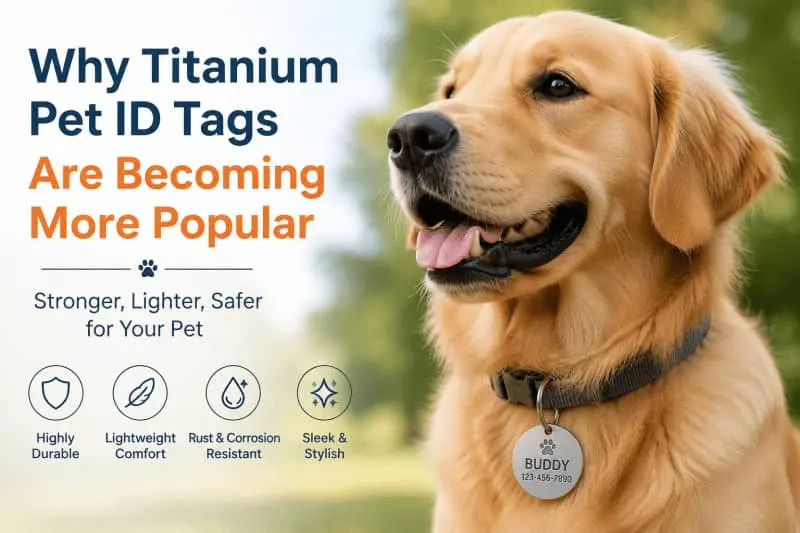
Titanium pet ID tags are becoming increasingly popular because they combine lightweight comfort, outstanding corrosion resistance, excellent durability, skin-friendly performance and a premium modern appearance.
Why Pet Owners Are Choosing Titanium
Pet ID tags have traditionally been made from stainless steel, aluminum, brass or plastic. Titanium is now becoming a popular alternative because it offers a rare combination of low weight, strength, corrosion resistance and comfort.
Titanium Is Remarkably Lightweight
Common titanium grades have a density of approximately 4.4 to 4.5 grams per cubic centimetre. Many stainless steels are close to 8 grams per cubic centimetre. A titanium tag of the same size may therefore weigh only around 55% to 60% as much as a comparable stainless-steel tag.
This reduced weight can make a noticeable difference for cats, puppies, small dogs, senior pets and animals that wear more than one tag. A lighter tag creates less pulling and swinging while the pet walks, runs, eats or sleeps.
It Offers an Excellent Strength-to-Weight Ratio
Titanium is lightweight, but it is not fragile. It is widely valued for combining relatively low density with impressive strength. A properly manufactured titanium pet tag can therefore feel solid and durable without being unnecessarily heavy.
It Resists Water and Corrosion
Titanium naturally forms a stable protective oxide layer on its surface. This helps it resist rain, saliva, bathwater, humidity, mud and normal outdoor conditions.
For active pets that swim, walk in the rain or spend time outdoors, this corrosion resistance can help preserve both the appearance of the tag and the readability of the information placed on it.
Engraved Information Can Remain Clear for Longer
The main purpose of a pet ID tag is to help a lost animal return home. Titanium provides a durable surface for precision engraving and laser marking. When the information is applied correctly, it does not depend on a paper label, sticker or surface paint that may peel away.
A titanium tag can carry a pet name, telephone number, emergency contact, medical alert, microchip notice, QR code or digital pet-profile link.
Titanium Is Known for Its Biocompatibility
Titanium is widely used in medical devices, dental products, watches, eyeglass frames, earrings and body jewelry because of its strong corrosion resistance and favourable biocompatibility.
This makes properly selected and finished titanium an appealing material for a pet accessory worn close to the fur and skin. No material can be guaranteed to be completely allergy-free for every animal, but titanium is generally considered well tolerated.
It Is Suitable for Everyday Water Exposure
A dog may wear a titanium tag during walks in the rain, swimming sessions, grooming, camping trips, beach visits or snowy winter walks. The tag should still be rinsed and dried after exposure to saltwater, pool chemicals, mud or strong cleaning products.
Titanium Has a Premium Modern Appearance
Pet accessories have become part of the way owners express care, personality and lifestyle. Titanium has a clean, modern and high-end appearance. Its subtle metallic finish looks refined without being excessively decorative.
The material is already associated with aerospace technology, medical equipment, premium watches, performance bicycles and high-end jewelry. Choosing titanium for a pet tag can reflect the value owners place on their animals as members of the family.
It Supports Clean and Minimalist Design
Titanium does not need bright paint or heavy decoration to look valuable. It is well suited to simple shapes, smooth edges, clear typography, precise engraving and a visible QR code.
A good pet tag should be attractive, but readability must always remain the priority. Someone who finds a frightened or injured pet should be able to understand the information quickly.
It Works Well with Digital Pet Identification
Traditional pet tags have limited space. A QR-enabled titanium tag can connect the physical tag to a digital pet profile containing more complete and updateable information.
The profile may include multiple contact numbers, emergency contacts, a pet photograph, medical conditions, allergies, medication details, veterinarian information, behavioural guidance and microchip status.
The physical titanium tag can remain in use while the online profile is updated whenever the owner moves, changes a phone number or adds new medical information.
Titanium Can Provide Better Long-Term Value
Titanium pet tags usually cost more than basic aluminum, plastic or low-cost stainless-steel tags. However, long-term value depends on durability, comfort, readability and whether the digital information can be updated without replacing the tag.
A better-quality tag may reduce the need for repeated replacement when paint fades, coatings peel, thin metal bends or printed information becomes difficult to read.
Titanium Reflects a Broader Change in Consumer Products
More consumers are choosing titanium for products that are worn close to the body or expected to last for years. Earrings, watches, glasses, outdoor equipment and premium personal accessories increasingly use titanium because it is lightweight, durable and comfortable.
Pet products are following the same direction. Owners are paying more attention to what touches their pets, how long a product lasts and whether it reflects the quality they expect.
Frequently Asked Questions
Is titanium lighter than stainless steel?
Yes. Common titanium grades have a density of about 4.4 to 4.5 grams per cubic centimetre, compared with close to 8 grams per cubic centimetre for many stainless steels. A similarly sized titanium tag may weigh only around 55% to 60% as much.
Will a titanium pet tag rust?
Titanium is highly resistant to ordinary corrosion because it naturally forms a protective oxide layer. The attachment ring or clasp may be made from another material, so those parts should also be checked.
Can my dog swim while wearing a titanium tag?
A properly made titanium tag should tolerate normal fresh-water exposure very well. After contact with saltwater, chlorine or mud, rinse it with clean water and dry it.
Is titanium suitable for pets with sensitive skin?
Titanium is generally considered highly biocompatible and is widely used in body-contact applications. However, owners should still monitor the pet's skin and consult a veterinarian if irritation develops.
Can titanium become scratched?
Yes. Titanium is durable but not completely scratch-proof. Surface marks may develop through contact with floors, bowls, collars or other tags.
Is a titanium tag better than a microchip?
They serve different purposes. A microchip normally requires a compatible scanner, while a visible tag can be read or scanned immediately by a person who finds the pet. Many pets benefit from having both.
Conclusion
Titanium pet ID tags are becoming more popular because they solve several practical problems at the same time. They are significantly lighter than comparable stainless-steel tags, strong enough for everyday use, highly resistant to corrosion and well suited to products worn close to the body.
Beyond performance, titanium also offers a premium and modern appearance. When combined with clear permanent marking and a secure digital pet profile, a titanium tag becomes more than a decorative accessory. It becomes a durable connection between a lost pet and the people trying to bring it safely home.